Buying guides
Which chainsaw sizes should a distributor stock? 25cc to 105cc explained
By the Arbora export team. Published . 7 min read.
Why does displacement matter more than the box says?
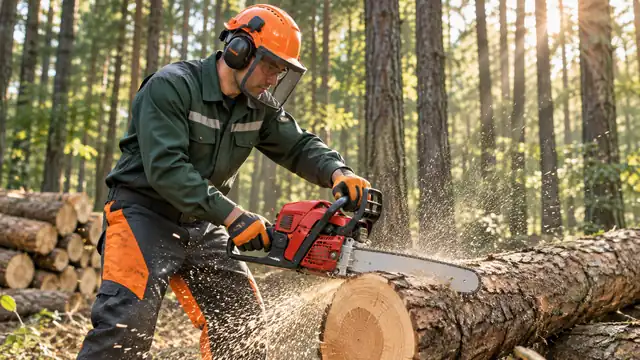
Displacement, measured in cubic centimetres (cc), sets how much power the engine can deliver to the chain. Power determines the longest bar the saw can pull without bogging down in the cut. A 25cc saw is comfortable with a 10–12 inch bar, while a 92cc saw can pull 36 inches or more. Selling a small saw with a long bar is the most common cause of warranty complaints about "weak" engines.
What is each class used for?
| Class | Typical bar | Main buyers | Typical work |
|---|---|---|---|
| 25–45cc | 10–18 in | Homeowners, orchards | Pruning, limbing, small firewood |
| 52–58cc | 18–24 in | Farmers, rural dealers | Firewood, storm clean-up, felling small trees |
| 72cc | 20–28 in | Contractors, forestry | Felling and bucking medium timber |
| 92cc | 20–42 in | Logging crews | Large-diameter hardwood |
| 105cc | 36–42 in | Mills, heavy logging | Milling and the largest trees |
In our own range those classes map to the NT2510 and NT4520 (light), the NT5800 and NT5853 platforms (mid), and the 72cc, 92cc and 105cc professional saws.
Which class should carry most of your stock?
For farm and rural markets, the 52–58cc class usually carries the largest share of orders, because one saw can handle firewood, fencing and occasional felling. Light saws sell in volume where gardens and fruit farms dominate. Large saws sell in smaller numbers but at higher value, and buyers expect spare chains, bars and sprockets to be available locally.
How do I match bars and chains to each saw?
Agree three things with your supplier before you order: bar length, chain pitch and chain gauge. Mid-size saws commonly use .325 inch or 3/8 inch pitch; large saws use 3/8 inch or .404 inch. Keep pitch consistent across your range where you can, so one stock of chain fits several models.
What should I check on a sample saw?
- Cold start: it should start within a few pulls after the choke routine in the manual.
- Idle: the chain must not move at idle.
- Chain brake: test it at full throttle on a sample.
- Oiler: hold the tip over a light surface at high revs and look for an oil line.
- Vibration: compare handles after five minutes of cutting.
Next step
If you are planning a mixed chainsaw order, send us your target markets and the bar lengths your customers ask for. We will suggest a model mix and confirm the chain pitch for each saw.
Related products
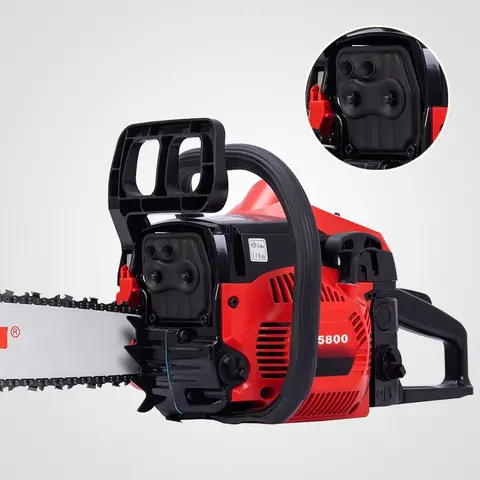
NT5800 54.5cc Chainsaw – 24 in bar
54.5cc, 2200W
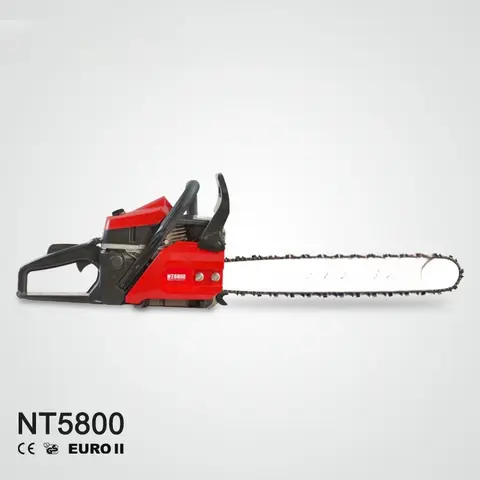
NT5800 58cc 2-Stroke Top-Handle Chainsaw
58cc, 2200W, 2-stroke
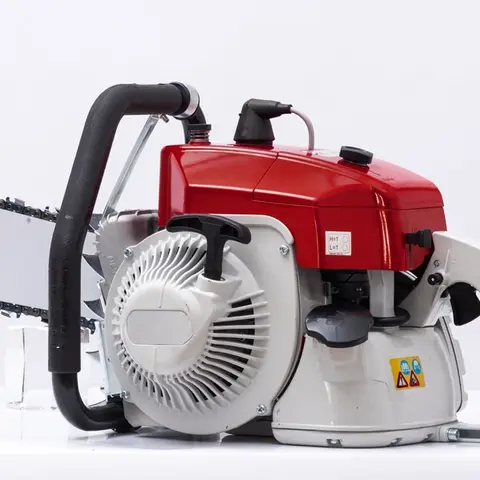
NT10500 105cc Chainsaw – 36/42 in bar
105cc, 1800 W
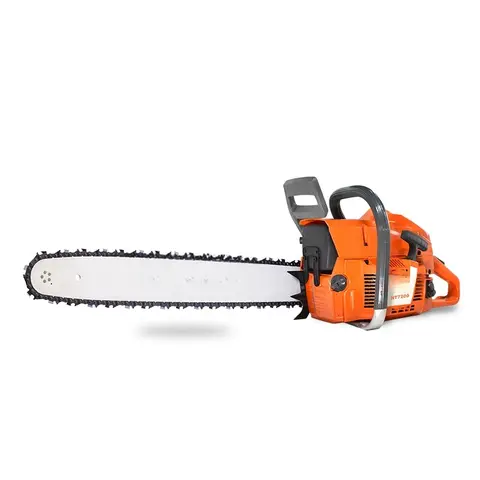
NT7200 272-class 72.2cc Chainsaw – 24 in bar
72.2cc, 3200W
Ask our team
Questions about this guide or a quotation. We reply within one working day.